
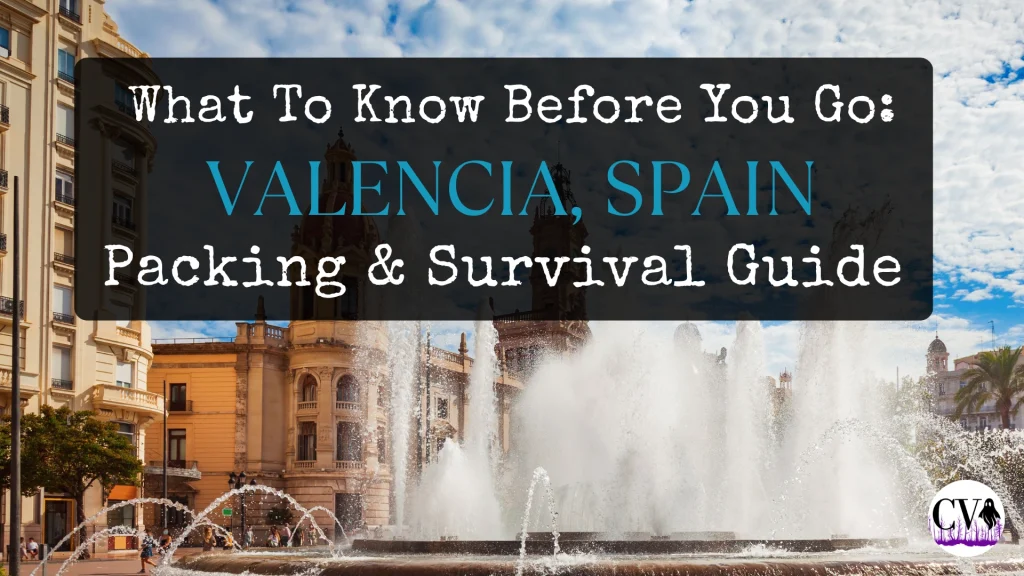
What to Know Before Visiting Valencia: Packing & Survival Guide
Valencia is an easy city to love, but it is not always an easy city to understand on a first visit. The old town twists in strange directions, museum hours can catch you off guard, summer heat changes how much you can realistically do in a day, and some of the best historical stops are the ones most visitors walk past without realizing what happened there.
We came to Valencia sight-unseen (on a holiday, no less) and ended up staying permanently. That means this guide is built from both sides of the trip: what we wish we had known before arriving, and what we have learned from actually living here.
Inside, you’ll find the practical details that make a Valencia trip smoother: when to visit, what to wear, how to get around, what to book ahead, how to plan around heat and closures, and which small habits will save you time.
Think of this as your practical Valencia travel guide- direct from a pair of travel-loving historians who’ve spent the past 8 years exploring the city’s winding streets, hidden corners, and layered history.
Weather and the Best Times to Visit Valencia
Valencia features a Mediterranean climate with more than 300 days of sunshine annually. However, there are a few travel windows to plan for to avoid severe weather hazards or disruptions.
The calendar year divides into three primary windows for travelers:
- The Temperate Windows (From March to May and September to October): Mild daily temperatures ranging from 18°C to 25°C (64°F to 77°F) make these the perfect months for walking tours and city exploration.
- The Humid Cauldron (July and August): Summer temperatures regularly exceed 35°C (95°F). For travelers accustomed to tropical, swampy climates like Florida, Valencia feels equally hot but noticeably drier, with a distinct, dusty quality. This dry, dusty sensation is caused by the calima, a meteorological phenomenon where hot, heavy winds carry fine sand particles from the Saharan desert directly across the Mediterranean, settling over the city in a hazy shroud. Bring sunglasses, hats, 50 FPS (50 SPF) sunscreen and eye drops- you’ll be glad to have them. (Also avoid sleeveless shirts if you burn easily.)
- The Autumn and Spring Torrential Rains (March-April, October-November): spring and autumn can bring sudden heavy rain. The biggest risk is in autumn, when the region can be affected by a weather pattern called DANA, sometimes known as a “cold drop.” When this happens, a lot of rain can fall in a short time, which may cause street flooding, travel delays, and very slippery pavement in the old city. Check the forecast, wear shoes with good grip, and leave some flexibility in your plans.
Walking, Cobblestones, and Luggage in Valencia’s Old Town
Valencia’s historic center is best explored on foot, especially around El Carmen and the older streets near the cathedral, La Lonja, and Plaza del Mercado. Expect to walk a lot- often 15,000 to 20,000 steps (or more) on a full sightseeing day- and plan your shoes accordingly.

The old town is full of narrow lanes, pedestrian streets, and uneven stone surfaces. Some areas are difficult or impossible for cars to access, which is part of the charm, but it also means you may need to walk farther than expected between your hotel, restaurants, museums, and historic stops.
Many old streets are made from smooth stone that can become surprisingly slippery after rain, especially in spring and autumn. Wear comfortable shoes with good grip, and be extra careful on polished stone near plazas, church entrances, and narrow side streets.
If you are staying in Valencia’s old town, think carefully about your luggage. A backpack or lightweight carry-on is much easier than a heavy wheeled suitcase.
Suitcase wheels can catch on uneven stones, rattle loudly over cobbles, and become exhausting to drag through narrow streets.
Pack lighter than you think you need, especially if your hotel is tucked inside the historic center. (We’ve used these exact travel backpacks all over Europe for 8+ years now- I use the 70L and Jess uses the 55L. Lifetime warranty for the win!)
Public Transportation and City Transit
Valencia offers an amazingly robust, affordable, and clean public transportation system. The primary modes of transport are the Metrovalencia subway network (aka the Metro), the EMT municipal bus network, and the above-ground tram system (also the Metro).
If you’re planning on using public transportation while sightseeing, you’ll get the best value for your money with this Valencia Tourist Card from Booking.com. It comes with free unlimited public transportation PLUS free access to most museums and discounts on other attractions.
Other ways to access public transportation include:
- The SUMA Card: The most efficient way to travel is by purchasing a SUMA card. This card works for the metro, tram, EMT city buses, and regional commuter trains under a single ticketing system. Much like the Valencia Travel Card, you can skip purchasing individual tickets by buying a SUMA card preloaded with ten rides and free transfers between buses and the metro within a certain time limit. (This card is for transportation ONLY, however, so it doesn’t come with museum access like the VLC card above.)
- Airport Connection: The airport is connected directly to the city center via Metro Lines 3 and 5. The journey takes approximately twenty minutes, making taxi services largely unnecessary for reaching old-town accommodations. (Yay for not needing airport transportation!)
- Reaching the Coast: While the historic core is easily explored on foot, reaching the beach neighborhoods requires transit. Tram Lines 4, 6, and 8 connect the central metro lines directly to the beachfront boardwalks. You can also take the 95 or 99 bus to reach Malvarrosa Beach (Playa del Malvarrosa), or go further out on the 25 bus to reach El Saler Beach (Platja de la Devesa del Saler), which is smaller and slightly less touristy.
- Ticketing Compliance: Tickets and cards must be validated at the electronic readers upon boarding buses or entering metro stations. Failing to validate a ticket, even if it has remaining rides, can result in immediate fines during random transit inspections. This means you need to SCAN the cards before boarding- typically at the entry stalls or upright machines.
What to Wear When Visiting Valencia (Dress Codes)
Although Valencia is a prominent coastal city, it maintains traditional European standards of decorum within its historic and religious institutions.
- Religious Sites and Cathedrals: To enter the Valencia Cathedral, which houses the historic Holy Chalice, or the highly decorated Parish of San Nicolás, visitors must follow strict dress guidelines. Shoulders and knees must be completely covered. Tank tops, sleeveless shirts, crop tops, and short athletic shorts can cause you to be denied entry at the door.
- The €300 Municipal Fine: Walking through the historic city center or municipal buildings while shirtless, or wearing only swimwear, is prohibited. Under local city ordinances, wearing bikinis, swim trunks, or going shirtless outside of designated beach boardwalk zones can result in an on-the-spot fine of up to €300. (This includes wearing a bikini top with shorts, so bring a cover or t-shirt to avoid the fines.)
- Acclimatization for Cold-Climate Travelers: Visitors arriving from northern or colder climates must realize that Valencia’s heat feels significantly more intense due to the architecture of the historic center. The tall, pale limestone walls reflect solar radiation directly onto pedestrians, and the narrow medieval alleyways block refreshing coastal breezes, trapping heat at street level. Hats, sunglasses and sunscreen can be lifesavers, especially on hotter days.
Get Your Phone Ready Before You Start Exploring
Valencia is easy to navigate once you get your bearings, but the old town can still be confusing. Narrow streets, small plazas, thick stone buildings, underground ruins, and museum interiors can all make your phone less reliable at the exact moment you need directions, translations, or tickets.
Before you head out, set up a few things offline so you are not stuck depending on signal or data.
- Download Valencia in Google Maps:
Save the Valencia city map offline before your trip. This helps you keep your route visible even if your signal drops in a narrow street, museum, or underground space. - Download Spanish in Google Translate:
Install the Spanish offline language pack. It is especially useful for reading museum panels, historical markers, local menus, signs, and ticket information. The camera translation feature can be a lifesaver when you’re tired and don’t want to type everything manually. - Save your itinerary PDF to your phone:
Download our free Cursed Voices 2-Day Dark History Itinerary directly to your device, not just your email or cloud storage. (It’s an easy, clickable PDF with direct link to the Google Maps route!) That way, you can still open the maps, addresses, and historical context if you’re inside a crypt, museum basement, Roman archaeological site, or thick-walled old building with a weak signal. - Set up a travel-friendly payment card:
Before your trip, consider setting up a Wise or Revolut account to reduce currency conversion fees and make spending abroad easier. Both apps also let you freeze and unfreeze your card quickly from your phone, which is helpful if a card is lost, stolen, or compromised. (You can also pay with your phone, which is a handy feature in Europe.)
We have used Wise, formerly TransferWise, for years, and it has been the fastest and most reliable option for us so far. Whatever you use, set it up before you travel so you are not trying to verify accounts or move money while standing in an airport, hotel lobby, or crowded plaza.
Common Scams, Theft, and Safety
Valencia is generally a very safe city, and violent crime against visitors is rare. The main issue travelers are most likely to run into is petty theft, especially in crowded areas such as Mercado Central, Plaza de la Reina, the streets around the cathedral, and near Estació del Nord.
Most scams here rely on distraction, not force. Someone gets your attention for a few seconds, and that brief moment is enough for a phone, wallet, or bag to disappear- or, in some cases, for payment cards to be targeted. Here are a few things to watch out for:
- The dropped-item distraction:
A stranger may drop coins, keys, papers, or another small item near you, then insist it belongs to you. While you are looking down, checking your pockets, or trying to sort out the confusion, an accomplice may target your bag or pockets. In some cases, travelers have also reported contactless cards being scanned during these close-range distraction encounters. It is not the most common scam, but it does happen (and has happened to us once before). If something like this feels off, step away, check that you still have your belongings, and monitor or temporarily freeze your payment cards through your banking app if needed. - The rosemary or palm-reading approach:
Around tourist-heavy spots, especially near the cathedral, someone may offer you a sprig of rosemary or try to start an unsolicited palm reading. Once you accept, they may pressure you for cash while keeping you engaged longer than you intended. The easiest response is a polite but firm “No, gracias” and to keep walking. Do not take anything from someone unless you actually want to pay for it. - The spill or cleanup trick:
A stranger may bump into you, spill a little liquid or food on your clothing, and then immediately offer to help clean it up. Sometimes it is an accident, but it can also be a distraction technique. If this happens, keep hold of your bag and valuables, move away from the crowd, and deal with the mess yourself.
Simple safety habits that help:
Use a crossbody bag that zips closed, keep your phone out of your back pocket, and do not leave bags or wallets loose on café tables or while lounging on the beach or in the park. (Even better, use a bag that has double-secure closures like this one or has zippered interior pockets to keep your wallet from being easily reachable.)
If you use Wise, Revolut, or another banking app, make sure you know how to freeze your card quickly in case it is lost, stolen, or compromised. If you want extra peace of mind, an RFID-blocking wallet or card sleeve is also worth considering.
Valencia is not a city where you need to feel nervous the whole time. Just stay aware in busy areas, keep your valuables secure, and treat unexpected interactions with a little caution.
Daily Basics: Water and Staying Hydrated
Valencia is a very walkable city, but the heat and humidity can sneak up on you, especially if you are spending the day exploring the old town, climbing towers, visiting museums, or walking between historic sites. Carrying water is one of the easiest ways to make your trip more comfortable.
- Tap water in Valencia is safe to drink and meets European drinking-water standards. That said, many visitors do not love the taste. Because the region has hard water, the tap water can taste mineral-heavy, chalky, or strongly treated compared with what you may be used to at home. It is safe- just not always delicious.
- To avoid buying plastic bottles all day, bring a reusable water bottle. You will find public drinking fountains in many squares, parks, and streets around the city. Valencia has also added modern public drinking-water points in some busy areas, where you can refill for free while you are out exploring.
- The easiest routine is simple: fill your bottle before you leave your hotel, top it up whenever you pass a fountain, and drink more than you think you need in summer. If you are sensitive to the taste of hard water, consider bringing a filtered bottle or buying a large water bottle from a supermarket to refill during your stay.
It is a small thing, but staying hydrated can be the difference between enjoying Valencia’s strange old streets and feeling like you have been personally cursed by the Mediterranean sun. Also, if you get dehydrated easily (like Jess does), we swear by these hydration tablets that you drop into your water. They’re a lifesaver, especially during the summer.
Where to Eat and When: Valencia’s Dining Schedule
Valencia is a fantastic food city, but the meal schedule can surprise visitors from North America, the UK, or northern Europe. If you go looking for dinner at 6:30 or 7:00 PM, many restaurants will still be closed. If you wait too long in the afternoon, you may find that kitchens have shut down between lunch and dinner.
Here is the basic rhythm:
- Breakfast / Desayuno: 8:00 AM–10:00 AM
Usually light: coffee, toast, pastry, or something simple before the day gets going. - Almuerzo: 10:30 AM–12:00 PM
This is a very Valencian tradition and worth trying at least once. Think coffee, olives, peanuts, and a serious sandwich, often made with a half baguette. It is more than a snack, but not quite lunch. - Lunch / Comida: 2:00 PM–4:00 PM
This is the main meal of the day. If you want paella, this is usually when to plan for it, not dinner. - Dinner / Cena: 9:00 PM–11:30 PM
Many restaurant kitchens do not open for dinner until around 8:30 PM or later. Showing up at 7:00 PM may leave you staring at locked doors or empty terraces.
The trickiest window is the late afternoon, roughly between 4:00 PM and 8:30 PM. In less touristy areas, finding hot food can be harder during this stretch. If you know you will be out exploring, plan ahead. If you’re staying in the historic city center (old town or Ciutat Vella), there are usually plenty of touristy places open all day.
What To Do If You Can’t Find Open Restaurants When Hungry
A simple workaround is to stop by a bakery, café, market, or supermarket earlier in the day and pick up a few easy things: empanadas, bocadillos, cheese, jamón, fruit, nuts, or pastries. Then, if the kitchens are closed when hunger hits, you already have a backup.
One of the easiest places to turn this into a low-cost break is the Jardín del Turia, the long park built inside Valencia’s old riverbed. Find a shady spot under the trees, take a picnic break, and save your energy for the evening, when the city comes alive again.
If you do find yourself in need of a place to eat when it feels like everything is closed, you can always open Google Maps, search Restaurants, and click the ‘open now’ button to see what is available- but be aware that places open during siesta are often likely to charge higher, ‘touristy’ prices.
(If you’re on a tight budget, search for Mercadona instead- it’s a local grocery store with great ‘counter’ style meal options- like premade burgers or sandwiches- at reasonable prices.)

Bathrooms, Coins, and Small Purchases
Public bathrooms in Valencia can be harder to find than many visitors expect, especially when you are walking through the old town. They do exist in places like train stations, markets, museums, shopping centers, and major attractions, but they are not always free.
Some public toilets charge a small fee, and cafés or bars usually reserve their bathrooms for customers. In many places, you may need to buy a coffee, water, or snack before asking to use the restroom. This is normal, so it is worth planning around rather than waiting until it becomes urgent.
It’s also helpful to carry a few coins with you during the day- especially €0.50, €1, and €2 coins. You do not need a huge amount, but having around €5 to €10 in small change can make things easier for toilets, small purchases, lockers, tips, or places that do not want to run a card for something tiny. (For example, a bottle of water from Mercadona is typically only 60-80 cents, so pulling out a credit card can feel a bit silly.)
A good habit is to use the restroom whenever you stop for coffee, lunch, a museum, or a paid attraction. Do not assume there will be an easy public bathroom on the next street. Valencia is comfortable to explore, but the bathroom situation rewards people who think one step ahead.
If you’re sightseeing close to your hotel, stopping at the hotel for a quick bathroom break is always an easy option as well. (BTW, see our post of top picks for historic hotels in Valencia for great places to stay.)
Your Valencia Day Bag Checklist
Use this as a quick packing checklist before heading out for a full day in Valencia’s historic center:
[ ] Comfortable shoes with good grip: Valencia’s old stone streets can be slippery, especially after rain.

[ ] Lightweight day bag or backpack: Easier for carrying water, layers, snacks, and purchases while walking the old town. (We like this crossbody bag!)
[ ] Scarf or light cover-up: Useful for entering churches, cathedrals, and religious sites where modest dress may be expected.
[ ] Reusable water bottle: Refill at public fountains or water points throughout the city. (And don’t forget your hydration tablets!)
[ ] Small coins: Keep a few €0.50, €1, and €2 coins for public bathrooms, lockers, tips, or small purchases.
[ ] Secure wallet or card holder: Use something zipped, close to your body, and ideally RFID-blocking if you want extra peace of mind. (Or keep a small one like this inside your larger bag.)
[ ] Phone with offline maps and Spanish translation downloaded: Helpful in narrow streets, museums, underground ruins, and thick-walled historic buildings where signal can be weaker.
[ ] Saved offline copy of your itinerary: Download your PDF guide directly to your phone so you can access routes, addresses, notes, and maps without relying on mobile data. (Grab our awesome 2 Day Valencia Itinerary here, and you’ll be set!)
[ ] Sunglasses, hat, and sunscreen: Especially important in spring, summer, and early autumn when the sun can be strong. (We use Eucerin SPF50 for stronger, reliable coverage. We do NOT suggest using Garnier- it’s popular here, but our experience with it has not been great.)
[ ] Eye drops or allergy relief: Helpful on windy days, during Saharan dust episodes, or if your eyes get irritated easily. (Claritin here is called Loratadina, and only costs a few euros- but if you ask for ‘Claritin’ it will easily cost over 10 euros or more.)
[ ] Portable charger: A full day of maps, photos, translations, and tickets can drain your phone faster than expected. (We use this charger because it doesn’t weigh down our bag and charges pretty quickly.)
Summary
Valencia is easy to enjoy once you understand its rhythm. The old town is walkable, beautiful, and full of history, but it works best when you plan around the details: comfortable shoes, flexible meal times, offline maps, a little loose change, and basic awareness in busy tourist areas.
You do not need to overprepare or feel nervous. Just give yourself enough water, know when restaurants are open, keep your phone and payment cards secure, and remember that Valencia’s historic center was built long before rolling suitcases, Google Maps, and modern travel habits.
With a little planning, the city becomes much easier to explore- from Roman ruins and cathedral chapels to old market squares, shaded parks, and the strange historic corners most visitors walk right past.
Frequently Asked Questions
Yes. Valencia is generally a very safe city for solo travelers, including solo women travelers. Violent crime is rare, and most visitors will feel comfortable walking around the main historic areas during the day and evening.
The main thing to watch for is petty theft in crowded places, especially markets, train stations, busy plazas, outdoor terraces, and tourist-heavy streets. Keep your bag zipped and close to your body, avoid keeping your phone in your back pocket, and do not leave phones or wallets sitting on café tables.
Yes. Tap water in Valencia is safe to drink and meets public health standards. Some visitors dislike that the tap water can taste mineral-heavy, chalky, or strongly treated compared with what you may be used to at home. Many travelers use a refillable bottle, filtered bottle, public water points, or bottled mineral water depending on their preference.
For churches, cathedrals, and religious sites, dress respectfully. As a general rule, avoid swimwear, very short shorts, bare shoulders, or anything that looks more beach-ready than church-ready. A light scarf, shawl, or overshirt is useful if you are visiting places like Valencia Cathedral or San Nicolás. Also, do not walk around the city center shirtless or in swimwear. Valencia has local rules against beachwear in urban areas, and fines can apply.
Liked this post? Check out more of our dark histories podcast, deep dives and posts!

How 5 Religious Figures Dismantled European Witch Trials- From the Inside
Where to Stay in Valencia: 6 Hotels for History Buffs
9 Dark Legends From Europe’s Most Beautiful Locations
2 Days in Valencia: A History Lover’s Guide to the Old Town
5 of Europe’s Most Infamous Monsters… Were They Innocent?
Spanish Inquisition vs. The Basque Witches: The 1610 Logroño Trial

Thank you for exploring these darker corners of the past with us!
Check out our full deep-dives (and the documents we found)- subscribe to our YouTube Channel.
Prefer to listen on the go? You can find us on Spotify for your midnight commutes.
Finally, Cursed Voices is a labor of love and intensive research. Please consider supporting our work on Buy Me a Coffee. Every cup helps us dig a little deeper into each new piece of weird history.
We couldn’t do this without your curiosity and support. Thank you for being part of the Cursed Voices community!
Click HERE to jump back to top of page.
Resources for Valencia Logistics and History
Note: These resources have been reviewed by Larry and are publicly available unless otherwise stated below.
1- Agencia Estatal de Meteorología (AEMET), Official Weather Forecasts, Climate Data, and Meteorological Warnings for Valencia (n.d.) https://www.aemet.es
2- Visit Valencia, Official Tourism Board, Rules, Regulations, and Visitor Guidelines (n.d.) https://www.visitvalencia.com
3- EMIVASA (Empresa Mixta Valenciana de Aguas), Municipal Tap Water Quality Analysis and Supply Network Alerts (n.d.) https://www.emivasa.es
4- Portal Estadístico de Criminalidad, Ministerio del Interior, Official Crime Statistics and Security Reports for the Valencia Region (n.d.) https://estadisticasdecriminalidad.ses.mir.es
5- Archivo Municipal de Valencia, Administrative and Judicial Registers of the City Council (n.d.) https://www.valencia.es/ayuntamiento/archivomunicipal.nsf
6- Burns, Robert I., “The Crusader Kingdom of Valencia: Reconstruction on a Thirteenth-Century Frontier.” (Harvard University Press, 1967) https://archive.org/details/crusaderkingdomo02burn?q=%22michael+mores%22
7- Tribunal de las Aguas de la Vega de Valencia, “History: Tribunal of the Waters of the Vega of Valencia.” (2025) https://tribunaldelasaguas.org/historia/
To assist in navigating the historic streets of the old city, a self-guided route is available. Access the self-guided walking directions and coordinates of historic sites with our comprehensive 2-Day Dark History Valencia Itinerary PDF.
Download the Valencia Itinerary + Map for FREE:

